2023/9/21
Share to:
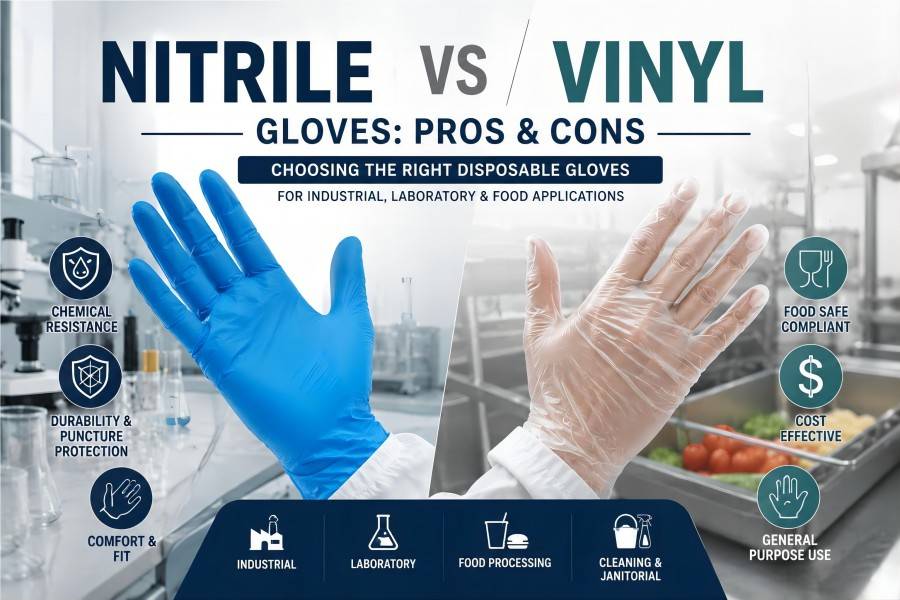
Nitrile vs Vinyl Gloves: Pros & Cons
Quick Summary
Nitrile and vinyl gloves are both common disposable hand protection options in industrial, laboratory, and food applications. Nitrile offers higher chemical resistance and durability, while vinyl is cost-effective and suitable for low-risk tasks.
1. Introduction
Disposable gloves are essential in protecting workers from chemicals, contamination, and physical hazards. Choosing the right type of glove affects safety, compliance, and operational efficiency. Nitrile and vinyl are the two most widely used materials for industrial and food-grade gloves.
2. Material Differences
2.1 Nitrile Gloves
Made from synthetic rubber, nitrile gloves are highly durable, puncture-resistant, and provide excellent chemical protection. They are suitable for industrial operations, laboratories, chemical handling, and food processing environments requiring medium to high-risk protection.
2.2 Vinyl Gloves
Vinyl gloves are made from polyvinyl chloride (PVC) and offer a cost-effective solution for low-risk tasks. They provide basic protection against contamination but have lower chemical resistance and durability compared to nitrile.
3. Performance Comparison
| Feature | Nitrile Gloves | Vinyl Gloves |
|---|---|---|
| Durability | High | Low to Medium |
| Chemical Resistance | Excellent | Limited |
| Comfort & Fit | Form-fitting, flexible | Loose fit, less flexible |
| Allergy Risk | Latex-free, low allergy risk | Latex-free, generally safe |
| Cost | Higher | Lower |
| Applications | Industrial, chemical, laboratory, food prep | Food handling, light cleaning, low-risk tasks |
4. Pros & Cons Summary
4.1 Nitrile Gloves
Pros: Durable, chemical-resistant, puncture-resistant, latex-free
Cons: Higher cost, slightly less comfortable for prolonged use
4.2 Vinyl Gloves
Pros: Cost-effective, latex-free, suitable for low-risk applications
Cons: Less durable, lower chemical resistance, looser fit
5. Choosing the Right Glove for Your Application
To select the right disposable glove, consider the following factors:
Type of chemical or contamination risk
Duration of wear and comfort
Regulatory compliance (EN, OSHA, FDA)
Budget constraints
Specific industry needs (food, laboratory, industrial)
For high-risk chemical handling, laboratory work, or industrial applications, nitrile gloves are the preferred choice. For low-risk food handling or short-term tasks, vinyl gloves are adequate and cost-effective.
6. Industry Applications
Food Industry: Vinyl gloves for light food prep, nitrile for handling oils or cleaning chemicals
Laboratories: Nitrile gloves for chemical resistance and puncture protection
Industrial Operations: Nitrile gloves for assembly, painting, or chemical handling
Cleaning & Maintenance: Vinyl gloves for basic protection, nitrile for stronger chemical exposure
7. Conclusion
Both nitrile and vinyl gloves have their advantages and limitations. Understanding material properties, protection levels, comfort, and application requirements helps industrial buyers choose the most appropriate disposable gloves. HXProtective offers a full range of nitrile and vinyl gloves to meet industrial, laboratory, and food-handling needs.
Related Articles
News Center
Industry News



 WhatsApp
Send us your message
You can send an email asking for the price and detailed information of this product. We will reply you as soon as we receive your email