
2023/9/21
A high-visibility safety vest is designed to help workers remain visible in areas where moving vehicles, machinery, or low-light conditions create potential hazards. However, even a well-made vest can gradually lose its effectiveness through regular use, washing, exposure to sunlight, and physical damage.
For construction companies, road maintenance contractors, warehouse operators, and industrial safety teams, knowing when to replace a safety vest is an important part of maintaining workplace visibility. A vest may still look wearable, but faded fluorescent fabric or damaged reflective tape can reduce its ability to make workers noticeable.
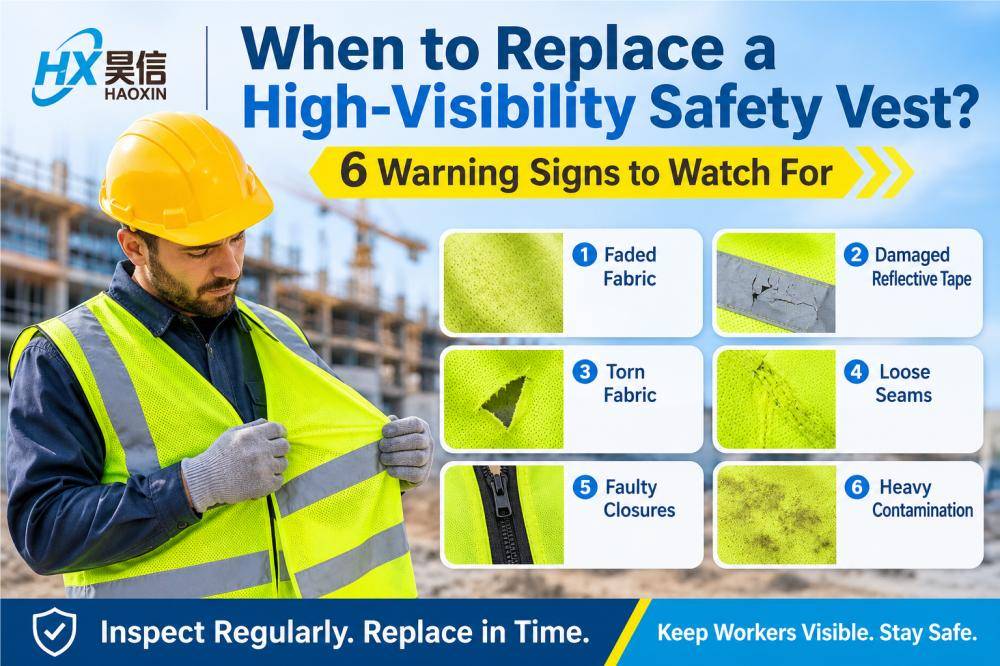
So, how can you tell when a high-visibility vest needs replacing? Here are six warning signs to check during routine inspections.
1. The Fluorescent Fabric Has Faded
Fluorescent fabric helps workers stand out against their surroundings, particularly during daylight and in changing weather conditions. Common high-visibility colors include fluorescent yellow, orange, and red-orange.
Over time, exposure to sunlight, repeated washing, dirt, and general wear can cause these colors to fade. A vest that was once bright and easy to notice may gradually become dull or less distinguishable from the background.
During inspection, compare the vest with a new or properly maintained vest of the same type. Pay particular attention to areas exposed to sunlight and frequent contact.
When to replace it: Replace the vest if the fluorescent material has noticeably faded or no longer meets the visibility requirements of the workplace or applicable garment standard.
2. Reflective Tape Is Cracked, Peeling, or Missing
Reflective tape is a critical component of high-visibility clothing. It helps make workers more visible when illuminated by vehicle headlights or other light sources in dark or low-light environments.
Repeated bending, abrasion, washing, and exposure to harsh working conditions can damage reflective materials. Look for the following problems:
Reflective tape is peeling away from the fabric.
Cracks or wrinkles appear across the reflective surface.
Sections of tape are missing or badly worn.
The reflective material has become visibly damaged or uneven.
Pay attention to both horizontal and vertical reflective strips. Damage to even part of the tape may affect the vest's overall visibility performance.
When to replace it: Replace the vest if reflective tape is significantly damaged, detached, missing, or no longer performs as required. Do not assume that loose reflective tape can always be repaired to restore the original performance.
3. The Fabric Is Torn or Has Holes
Safety vests are frequently exposed to demanding working environments. Contact with tools, equipment, building materials, sharp edges, and rough surfaces can cause tears or holes in the fabric.
Small areas of damage may seem insignificant, but larger tears can affect the vest's fit, structure, and ability to keep its visibility components in the correct position. Damaged edges can also become worse with continued use.
Inspect the front, back, sides, shoulders, and areas around pockets. Pay special attention to locations where the vest frequently rubs against equipment or other clothing.
When to replace it: Replace the vest if tears, holes, or material damage compromise its structure or visibility. Minor damage should only be repaired when the manufacturer's instructions allow it and the repair does not affect the garment's certified performance.
4. Seams and Stitching Have Become Loose
Stitching keeps the vest's panels, reflective tape, pockets, and other components securely connected. After extended use, seams may become loose or begin to separate, especially around high-stress areas such as the shoulders, armholes, side seams, and pockets.
Loose stitching can affect the vest's fit and cause reflective strips or fabric panels to shift out of position. It may also indicate that the garment is approaching the end of its usable life.
Check for:
Open or separated seams.
Broken or missing stitches.
Reflective tape coming loose at the edges.
Pockets or panels pulling away from the main fabric.
When to replace it: Replace the vest when seam damage affects its structure or the secure positioning of visibility materials. Minor stitching issues may be repairable, but any repair must preserve the vest's required performance.
5. Zippers, Hook-and-Loop Closures, or Other Fasteners No Longer Work
Closures help keep a safety vest properly fitted during work. Depending on the design, a vest may use a front zipper, hook-and-loop fasteners, snaps, or other fastening systems.
After repeated use, zippers can become stuck or damaged, while hook-and-loop fasteners may lose their grip because of dust, fibers, or wear. A closure that no longer works properly can allow the vest to open, shift, or hang loosely.
Before deciding to replace the vest, check whether the problem is caused by removable dirt or a minor issue that can be corrected according to the manufacturer's instructions.
When to replace it: Replace the vest if its fastening system cannot keep it securely positioned during normal work, or if the damage cannot be properly repaired.
6. Heavy Dirt, Oil, or Chemical Contamination Cannot Be Removed
High-visibility vests used in construction, roadwork, transportation, and industrial facilities are often exposed to dust, grease, oil, and other contaminants.
Ordinary dirt may be removed through proper cleaning. However, some stains and contaminants can remain in the fabric or reflective material after washing. Certain chemicals may also damage the garment, depending on the fabric and the type of exposure.
Check the manufacturer's care instructions before washing a vest. Using unsuitable detergents, excessive heat, or aggressive cleaning methods may accelerate material deterioration.
When to replace it: Replace the vest if contamination cannot be removed and affects visibility, or if chemical exposure has damaged the material. Follow the manufacturer's guidance when assessing garments exposed to hazardous substances.
How Often Should Safety Vests Be Inspected?
There is no single replacement schedule that applies to every high-visibility safety vest. Actual service life depends on fabric quality, reflective material, working conditions, cleaning frequency, storage, and how the garment is used.
Instead of relying only on a fixed replacement date, employers should establish a practical inspection routine.
Before each use: Workers should check for obvious damage, missing reflective tape, heavy contamination, or fastening problems.
During routine workplace inspections: Supervisors or safety managers should review the condition of vests used in demanding environments.
After washing: Check whether the fluorescent fabric, reflective tape, seams, and closures remain in good condition.
After unusual exposure: Inspect garments following chemical spills, severe abrasion, or other incidents that may have damaged the material.
Employers should also follow the manufacturer's care instructions and applicable workplace safety requirements. Where a vest is certified to a particular high-visibility standard, its condition and continued suitability should be assessed against the relevant requirements.
What Should Buyers Look for When Purchasing Replacement Safety Vests?
For wholesalers, distributors, contractors, and procurement teams, replacing worn-out safety vests is also an opportunity to review product specifications and purchasing requirements.
Before placing a bulk order, consider these factors:
Applicable safety standards: Confirm that the vest meets the requirements for its intended application and target market.
Reflective tape configuration: Check the tape width, placement, and visibility design required for the intended work environment.
Fabric quality: Consider fabric weight, breathability, durability, and suitability for the working conditions.
Construction details: Review stitching, reinforced edges, zipper quality, and pocket design.
Size and color options: Make sure the selected range accommodates different workers and workplace requirements.
Customization: For large orders, consider custom colors, logos, printing, and packaging options.
Choosing suitable safety vests from the beginning can help businesses manage replacement needs more effectively and maintain consistent workwear standards across their teams.
Explore HXProtective's high-visibility safety vests for different industrial and workplace applications. For bulk purchasing, OEM, or customized requirements, contact our team to discuss your specifications.
Quick Summary: 6 Signs Your Safety Vest Needs Replacing
A high-visibility safety vest should be replaced when its condition no longer supports the visibility and performance required for the job. Use this checklist during routine inspections:
Fluorescent fabric has noticeably faded.
Reflective tape is cracked, peeling, or missing.
Fabric has tears, holes, or serious damage.
Seams or stitching are loose or separated.
Zippers or other fasteners no longer secure the vest properly.
Heavy contamination cannot be removed or has damaged the material.
Regular inspections, correct cleaning, and timely replacement help businesses maintain suitable high-visibility workwear for their employees.
Frequently Asked Questions
1. How long does a high-visibility safety vest last?
There is no universal lifespan for all safety vests. Service life depends on material quality, frequency of use, washing methods, sunlight exposure, and working conditions. Inspect each vest regularly and replace it when its condition no longer meets workplace requirements or the manufacturer's guidance.
2. Can reflective tape be repaired on a safety vest?
Minor damage may sometimes be repairable if the manufacturer permits it. However, replacing or sewing over reflective tape does not automatically restore the vest's original certified performance. If the reflective material is significantly damaged, replacing the garment is generally the safer option.
3. Can I continue using a safety vest after washing it many times?
Repeated washing does not automatically mean a vest must be replaced. However, washing can gradually affect fluorescent fabric and reflective materials. Always follow the care label and inspect the vest after cleaning. Replace it if fading or damage affects its required performance.
4. Should a safety vest be replaced if only the reflective tape is damaged?
Yes, if the damage affects the required reflective performance. Reflective tape is an essential part of a high-visibility garment, so a vest with badly damaged or missing tape should not remain in service when it no longer meets workplace requirements.
5. Who is responsible for checking and replacing safety vests?
Employers should establish procedures for inspecting and replacing workplace safety equipment. Workers should also check their own vests before use and report visible damage. Clear inspection responsibilities help prevent worn or unsuitable garments from remaining in service.
Choose Reliable High-Visibility Safety Vests from HXProtective
Maintaining worker visibility requires more than providing a safety vest at the start of a job. Regular inspections and timely replacement are equally important, especially in environments where workers operate near vehicles, equipment, or moving traffic.
HXProtective supplies high-visibility safety vests for construction, roadwork, warehousing, and other industrial applications. We support bulk orders and customized requirements for distributors, wholesalers, and business buyers.
If you are sourcing replacement safety vests or planning a new bulk order, view our safety vest range or contact us at export@hxprotective.com to discuss your requirements.


 WhatsApp
Send us your message
You can send an email asking for the price and detailed information of this product. We will reply you as soon as we receive your email