2023/9/21
Share to:
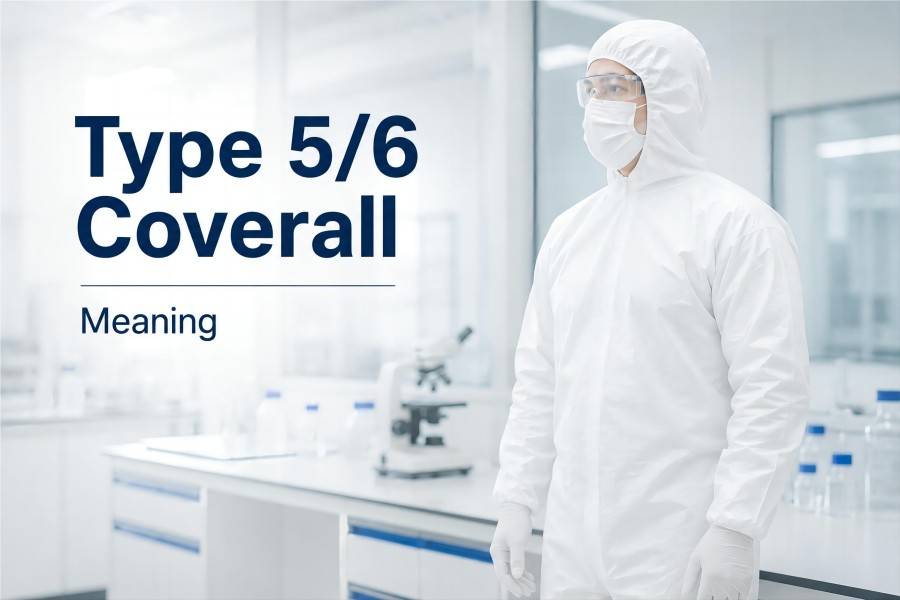
Type 5/6 Coverall Meaning
In the world of industrial safety and Personal Protective Equipment (PPE), technical jargon can often be confusing. If you are responsible for procurement or site safety, you have likely encountered the term Type 5/6 disposable coveralls.
Understanding these classifications is not just about compliance; it is about ensuring that workers are adequately protected against specific environmental hazards. This article explores the Type 5/6 coverall meaning, the significance of the Cat 3 designation, and how to choose the right protection for your team.
What is the Type 5/6 Coverall Meaning?
The European standards for chemical protective clothing categorize garments into six "Types." When a suit is labeled as a Type 5/6, it means it has been tested and certified to meet two distinct levels of protection:
Type 5: Protection Against Hazardous Dusts (EN ISO 13982-1)
A Type 5 certification indicates that the garment is designed to protect the wearer against hazardous dry particles and dust. This includes substances like asbestos, lead dust, or fine pharmaceutical powders. To pass this test, the suit must demonstrate "inward leakage" below a specific threshold when subjected to a fine-particle aerosol.
Type 6: Protection Against Light Liquid Splashes (EN 13034)
A Type 6 certification refers to "reduced spray-suit" protection. It is designed for environments where there is a risk of exposure to a light spray, liquid aerosols, or low-pressure, low-volume splashes of chemicals. It is important to note that Type 6 is not intended for full liquid immersion or high-pressure sprays.
In short: A Type 5/6 coverall is a dual-purpose garment that shields the wearer from both dangerous dry particles and minor liquid chemical splashes.
Understanding "Cat 3" Type 5/6 Coveralls
You will often see these garments marketed as Cat 3 Type 5/6 coveralls. The "Cat 3" (Category III) refers to the European PPE Regulation (EU) 2016/425.
PPE is divided into three categories based on the level of risk:
Category I: Simple design (e.g., gardening gloves) for minimal risks.
Category II: Intermediate risks.
Category III: Complex design for protection against "lethal or irreversible" risks.
Because Type 5/6 coveralls are often used in environments involving toxic dust (like asbestos) or chemical splashes that could cause permanent harm, they must be classified as Category III. This classification requires the manufacturer to undergo rigorous independent testing and ongoing quality audits by a "Notified Body."
Common Materials Used in Type 5/6 Disposable Coveralls
The effectiveness of these coveralls depends largely on the fabric construction. There are two primary materials used in the industry:
SMS (Spunbond-Meltblown-Spunbond): This is a trilaminate fabric. The "Meltblown" center layer acts as a filter for particles and liquids, while the "Spunbond" outer layers provide strength and breathability. SMS is highly breathable, making it ideal for high-temperature environments.
Microporous Film (MPF): This material consists of a non-woven fabric laminated with a thin microporous film. It offers excellent liquid repellency and particle protection. While it provides a higher barrier against liquids than SMS, it is generally less breathable.
Typical Applications
Type 5/6 disposable coveralls are versatile and used across a wide range of industries, including:
Asbestos Abatement: The Type 5 rating is essential for preventing microscopic asbestos fibers from reaching the skin or undergarments.
Pharmaceutical Manufacturing: Protecting workers from potent active pharmaceutical ingredients (APIs) in powder form.
Paint Spraying: The Type 6 rating protects against the fine mist of automotive or industrial paints.
General Maintenance: Used in "dirty" jobs involving grease, grime, and non-toxic dust.
Cleanrooms: Helping to prevent human shedding (skin cells/hair) from contaminating sensitive electronic or medical components.
How to Choose the Right Coverall
When selecting Cat 3 Type 5/6 coveralls, consider the following factors beyond just the numerical rating:
Seam Construction: Stitched seams are standard, but if you need a higher liquid barrier, look for "bound" or "taped" seams which prevent liquids from seeping through the needle holes.
Breathability vs. Barrier: If your team works in a hot warehouse, an SMS suit (Type 5/6) might be better to prevent heat stress. If they are dealing with more frequent liquid splashes, a Microporous suit is the safer bet.
Sizing and Fit: A suit that is too tight may rip during movement (especially at the crotch or armpits), while a suit that is too loose can become a tripping hazard or snag on machinery.
Antistatic Properties: Ensure the garment meets EN 1149-5 if the work is being performed in an environment where static discharge could cause an explosion or fire.
Conclusion
The Type 5/6 coverall meaning centers on a balance between particle filtration and liquid splash resistance. By opting for Cat 3 Type 5/6 coveralls, you are ensuring that the garment has been independently verified to protect against serious health risks.
Always conduct a thorough risk assessment of your specific workplace before choosing a garment. While Type 5/6 covers a broad range of hazards, specialized tasks involving heavy chemical saturation or biological agents may require Type 4 (spray-tight) or Type 3 (liquid-tight) protection.
News Center
Industry News



 WhatsApp
Send us your message
You can send an email asking for the price and detailed information of this product. We will reply you as soon as we receive your email