2023/9/21
Share to:
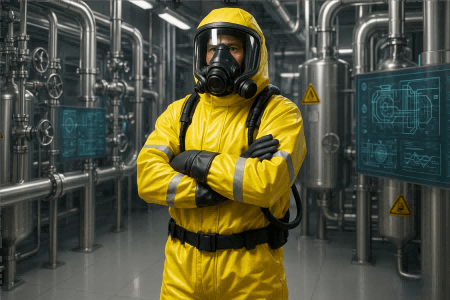
Safeguarding the Frontline: A Deep Dive into Chemical Protective Clothing in Modern Industry
In an era where industrial processes are increasingly complex and diverse, the safety of workers operating in environments exposed to hazardous chemicals remains paramount. Chemical Protective Clothing (CPC) is not merely an accessory; it is a critical line of defense, a meticulously engineered barrier designed to shield individuals from the myriad dangers posed by chemical agents. Understanding the nuances of CPC – from its types and protection levels to the stringent standards governing its use and the intricate selection process – is essential for any organization committed to worker safety.
The Unseen Threat: Why CPC is Non-Negotiable
Chemical exposure can lead to a spectrum of health issues, ranging from acute skin irritation and burns to chronic diseases affecting vital organs, and even fatality. The financial and human costs of such incidents are immense, underscoring the absolute necessity of robust protective measures. CPC acts as a physical barrier, preventing direct contact between hazardous substances and the wearer's skin, eyes, and respiratory system.
Decoding the Levels of Protection: A, B, C, D
Regulatory bodies like the Occupational Safety and Health Administration (OSHA) and the Environmental Protection Agency (EPA) have established a tiered system for CPC, commonly referred to as Levels A, B, C, and D. These levels dictate the degree of protection offered against various hazards:
Level A Protection: This is the highest level of protection, required when the greatest potential for skin, respiratory, and eye exposure exists. It typically involves a fully encapsulated, vapor-tight chemical protective suit, a self-contained breathing apparatus (SCBA) worn inside the suit, and multiple layers of chemical-resistant gloves and boots. Used for unknown hazards or highly toxic substances that are immediately dangerous to life or health (IDLH).
Level B Protection: Offers the same respiratory protection as Level A (SCBA) but provides less skin protection. It usually consists of a non-encapsulating, splash-protective chemical-resistant suit, SCBA worn outside the suit, and chemical-resistant gloves and boots. Used when the atmospheric hazard requires SCBA, but the skin hazard is less severe or well-defined.
Level C Protection: Provides less respiratory and skin protection than Level B. It typically involves a full-face or half-mask air-purifying respirator (APR), splash-protective chemical-resistant clothing (e.g., coveralls), and chemical-resistant gloves and boots. Only used when the atmospheric contaminants are known, their concentrations are measured, and the APR can provide adequate protection.
Level D Protection: This is the lowest level of protection, essentially a work uniform. It offers no respiratory or skin protection from chemical hazards. It's suitable for situations where no known hazard exists, or work is performed in a clean zone.
Types of Chemical Protective Clothing: A Material Science Marvel
The effectiveness of CPC hinges on the materials used, which are engineered to resist specific chemical classes. Common types include:
Polyvinyl Chloride (PVC): Good general-purpose chemical resistance, especially against acids, bases, and salts. Often used for splash protection.
Butyl Rubber: Excellent resistance to gases, ketones, esters, and highly corrosive inorganic acids. Offers good flexibility at low temperatures.
Nitrile Rubber: Strong, durable, and resistant to punctures, snags, and abrasions. Good against petroleum-based solvents, oils, and greases.
Viton®: Superior resistance to a broad range of aggressive chemicals, including aromatic and chlorinated solvents. Often used for highly specialized applications.
Tyvek®/Tychem® (DuPont): These are families of materials. Tyvek offers basic particulate and splash protection. Tychem materials (e.g., Tychem F, Tychem BR) incorporate barrier films to provide increasingly higher levels of protection against a wider range of chemicals, including permeation resistance.
Laminated Fabrics: Multi-layer materials combining different polymers to achieve broad-spectrum chemical resistance and durability.
These materials are fashioned into various forms, including gloves, boots, aprons, coveralls, and full body suits, each designed for specific exposure pathways.
The Bedrock of Safety: Chemical Protective Clothing Standards
Global and national standards organizations play a crucial role in ensuring the reliability and performance of CPC. Key standards include:
NFPA (National Fire Protection Association) Standards: Particularly NFPA 1991 (Vapor-Protective Ensembles for Hazardous Materials Emergencies) and NFPA 1994 (Protective Ensembles for First Responders to CBRN Incidents). These set rigorous requirements for chemical resistance, physical integrity, and overall performance.
ANSI (American National Standards Institute): Often adopts or references other standards, ensuring consistency in testing and labeling.
ISO (International Organization for Standardization) & EN (European Norm) Standards: A comprehensive suite of standards (e.g., EN 943 for gas-tight and non-gas-tight chemical protective suits) that define performance requirements and test methods for chemical protective clothing across Europe and internationally.
ASTM (American Society for Testing and Materials): Develops standard test methods for evaluating the chemical resistance and physical properties of protective clothing materials.
These standards dictate how materials are tested for permeation and penetration, tear resistance, abrasion resistance, and flame resistance, among other critical properties.
The Art and Science of Selection: A Comprehensive Guide
Selecting the appropriate CPC is arguably the most critical step and requires a systematic approach:
Hazard Assessment: This is the foundational step. Identify all chemicals present, their physical states (liquid, gas, solid), concentrations, potential for splash, immersion, or vapor exposure, and the duration of exposure. Consult Safety Data Sheets (SDS) for critical information on chemical properties and recommended PPE.
Permeation vs. Penetration:
Permeation: The process by which a chemical passes through a protective material at a molecular level. It involves absorption, diffusion, and desorption. Breakthrough time and permeation rate are key metrics.
Penetration: The flow of a chemical through closures, seams, pinholes, or other imperfections in the protective material.
Both must be considered. A material might resist penetration but allow rapid permeation.
Physical Demands of the Task: Consider the work environment (temperature extremes, confined spaces), the need for dexterity, mobility, and visibility. Heavy, bulky suits can induce heat stress and fatigue, increasing other risks.
Fit and Comfort: Properly fitting CPC is essential for both protection and worker acceptance. Ill-fitting gear can compromise the barrier and discourage consistent use. Comfort, breathability (where possible), and weight play a significant role.
Decontamination and Maintenance: Establish clear protocols for cleaning, inspecting, storing, and disposing of CPC. Improper decontamination can lead to cross-contamination or degradation of the material, compromising future protection. Reusable suits require thorough cleaning and inspection after each use.
Training: Workers must be comprehensively trained on how to properly don, doff, use, and inspect their CPC, as well as understand its limitations.
The Future of Chemical Protective Clothing
Innovation in CPC is continuous. Researchers are developing "smart" textiles with integrated sensors to detect chemical exposure or monitor physiological parameters. Advancements in material science are leading to lighter, more flexible fabrics with enhanced chemical resistance and improved breathability, addressing the persistent challenge of heat stress. Sustainability is also a growing focus, with efforts to develop more environmentally friendly materials and recycling programs for used CPC.
Conclusion: A Commitment to Safety
The selection and use of chemical protective clothing are complex undertakings that demand meticulous attention to detail, adherence to established standards, and a deep understanding of chemical hazards. By prioritizing comprehensive hazard assessments, informed material selection, rigorous training, and consistent maintenance, industries can ensure that their frontline workers are equipped with the best possible defense against chemical threats, fostering a safer and more productive work environment for all.
News Center
Industry News



 WhatsApp
Send us your message
You can send an email asking for the price and detailed information of this product. We will reply you as soon as we receive your email