2023/9/21
Share to:
Powder-Free vs Powdered Gloves: What Buyers Need to Know
Quick Summary
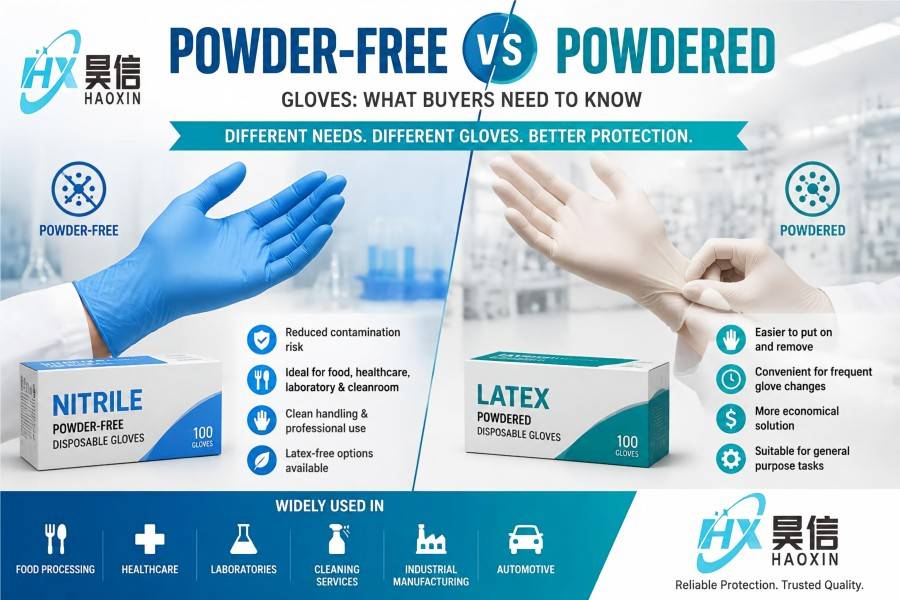
Powder-free and powdered gloves are two different types of disposable gloves designed for different working requirements. Powdered gloves are easier to put on and remove, while powder-free gloves provide cleaner handling and are preferred for industries where contamination control is important. Understanding the differences helps buyers choose the right glove solution.
1. Why Glove Powder Matters
When purchasing disposable gloves, many buyers focus mainly on material, thickness, and price. However, another important factor is whether the gloves are powdered or powder-free.
The powder inside some disposable gloves was originally added to make wearing and removing gloves easier. Over time, many industries have moved toward powder-free options because of cleanliness requirements and workplace standards.
For distributors and industrial buyers, understanding this difference helps avoid choosing the wrong glove type for specific applications.
2. What Are Powdered Gloves?
Powdered gloves are disposable gloves with a small amount of powder added inside, traditionally using cornstarch powder, to reduce friction between the glove and the hand.
The powder makes gloves easier to put on, especially during frequent glove changes.
Advantages of Powdered Gloves:
Easier to put on and remove
Reduced hand friction
Convenient for frequent glove changes
Often available at a lower cost
Common Applications:
General cleaning
Low-risk handling tasks
Industrial applications without strict contamination requirements
Short-duration work
3. Limitations of Powdered Gloves
Although powdered gloves offer convenience, they may not be suitable for environments where cleanliness and contamination control are critical.
Potential Concerns:
Powder may transfer to products or surfaces
Not suitable for some medical and clean environments
May cause concerns for sensitive applications
Can affect certain manufacturing processes
Because of these limitations, many industries have gradually increased their use of powder-free gloves.
4. What Are Powder-Free Gloves?
Powder-free gloves are manufactured without added powder. Instead, manufacturers use different treatment methods, such as polymer coating or chlorination, to make gloves easier to wear.
Today, powder-free gloves are widely used across healthcare, food processing, laboratories, and industrial applications.
Advantages of Powder-Free Gloves:
Cleaner handling performance
Reduced contamination risk
Suitable for sensitive applications
Preferred for professional environments
Available in nitrile, latex, and vinyl materials
5. Powder-Free vs Powdered Gloves: Key Differences
| Feature | Powder-Free Gloves | Powdered Gloves |
|---|---|---|
| Powder Content | No added powder | Contains powder |
| Ease of Wearing | Good | Very easy |
| Cleanliness | Higher | Lower |
| Contamination Control | Better | Limited |
| Industrial Use | Wide applications | More limited |
| Market Demand | Increasing | Decreasing in many industries |
6. Why Many Industries Prefer Powder-Free Gloves
Many industries now choose powder-free gloves because workplace requirements have become more focused on hygiene, product protection, and contamination control.
Industries Commonly Using Powder-Free Gloves:
Food processing
Healthcare
Laboratories
Electronics manufacturing
Automotive production
Cleanroom environments
For these applications, preventing unwanted residue is often more important than the convenience of powdered gloves.
7. Powder-Free Nitrile Gloves: A Popular Industrial Choice
Among modern disposable gloves, powder-free nitrile gloves have become one of the most popular options for professional users.
They combine several advantages:
Strong puncture resistance
Good chemical protection
Latex-free material
Clean handling performance
Suitable for long working periods
This makes them suitable for industries that require both protection and reliability.
8. How Buyers Should Choose Between Powder-Free and Powdered Gloves
The right choice depends on the application, industry requirements, and working environment.
Choose Powder-Free Gloves When:
Product contamination must be minimized
Working in food or healthcare environments
Handling sensitive products
Higher cleanliness is required
Choose Powdered Gloves When:
Tasks are short and low-risk
Frequent glove changes are required
Cost efficiency is the main consideration
9. What Bulk Buyers Should Consider Before Ordering
For distributors and importers, glove specifications should match customer expectations and market requirements.
Glove material (nitrile, latex, vinyl)
Powder-free or powdered option
Thickness and size range
Packaging requirements
Quality certifications
Supplier production capacity
A reliable disposable glove manufacturer should provide consistent quality and flexible OEM options.
10. Conclusion
Both powdered and powder-free gloves have their own advantages, but powder-free gloves have become the preferred choice for many professional industries due to cleaner handling and lower contamination risks.
For most industrial, food, healthcare, and laboratory applications, powder-free gloves provide a more reliable solution.
HXProtective supplies disposable gloves and PPE solutions for global distributors, wholesalers, and industrial customers with different application requirements.
Related Articles
News Center
Industry News



 WhatsApp
Send us your message
You can send an email asking for the price and detailed information of this product. We will reply you as soon as we receive your email